From 5.850 €
5 (6 Reviews)
7 Dates
I have some questions 🙋Please note: this program is fully all-inclusive, so from the moment you arrive, the only thing you need to think about is the climb. Everything else is covered: your UIAGM/IFMGA Mountain Guide for all six days, five hotel nights in Courmayeur on a half-board basis (before and after the course included), and all mountain huts. It also includes every cable car and lift on the route, from the Skyway Monte Bianco to the Matterhorn Alpine Crossing, and all road transfers. The program starts and ends in Courmayeur. You arrive with your gear and your fitness, and we take care of the rest.
The finest way to climb the Matterhorn is to go over it: up the Hörnli Ridge from Switzerland, across the summit ridge, and down the Lion Ridge into Italy. This 6-day program is built around that traverse. It gives you more time to prepare than any shorter format, and it is designed to give you the best possible chance of reaching the summit and completing the full crossing. Every part of the itinerary has been refined over more than 22 years of guided Matterhorn ascents.
The Matterhorn asks a lot of the people who climb it. Summit day is long, typically 10 to 12 hours for the traverse, and it requires excellent fitness, confidence on exposed rock, and the ability to move efficiently on mixed terrain of rock, snow and ice. The Lion Ridge adds fixed ropes, the Jordan Ladder and a long, sustained descent. That's why this program dedicates four full days to preparation before you set foot on the mountain.
Courmayeur, on the Italian side of Mont Blanc, it's an ideal base for the preparation climbs, quieter and more relaxed than Chamonix, and it has the food and hospitality Italy is known for.
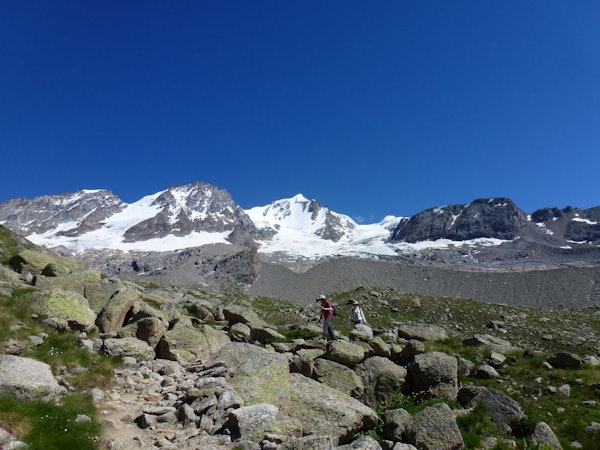
Days 1–4: preparation and acclimatization. Each climb in the first four days has a clear purpose. We start high in the Mont Blanc massif with the traverses of the Aiguilles Marbrées and the Aiguilles d'Entrèves, two granite ridges whose terrain closely resembles the Matterhorn. A night at the Torino Hut, above 3,300 metres, jump-starts your acclimatization. On Day 3 we climb the Rey Ridge to Punta Tsan, a quiet, wild route that Matterhorn guides have used for decades to test their clients before the real climb. It combines long physical effort, short-roping, beautiful rock and an exposed descent, with the Matterhorn in view the whole way.
Day 4 is a multi-pitch rock climb of moderate length, used to sharpen your climbing confidence while letting your body recover. The plan is deliberate: the more demanding days come first, and the intensity then eases so that you arrive at the Matterhorn rested and in top condition. Your guide works with two clients during these four days, which gives them time to understand your strengths and adjust the plan. Day 4 also serves as a flexible day: if the forecast shows a better weather window earlier in the week, we can move the Matterhorn ascent forward.
Days 5–6: the Matterhorn. From Cervinia, the Matterhorn Alpine Crossing takes us across the border, and we walk up to the Hörnli Hut at the foot of the ridge. The next morning you climb the Matterhorn with your own UIAGM/IFMGA Mountain Guide, on a dedicated 1:1 ratio. If the traverse goes ahead, you descend the Lion Ridge straight into Cervinia, and from there we drive back to Courmayeur. If the Lion Ridge isn't in safe condition, we climb and descend the Hörnli Ridge instead.
If you have less time available, our Matterhorn 4-Day Traverse offers the same summit experience with two days of preparation in the Mont Blanc massif.
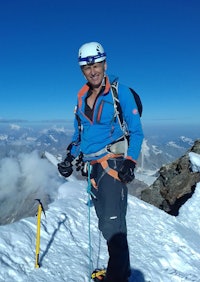
Arrive in Courmayeur, the mountain town at the foot of Mont Blanc's Italian side and our base for the first part of the program. Check in at our hotel, where your first night is included in the price.
At 6:00 p.m. you'll meet your UIAGM/IFMGA Mountain Guide at the hotel. After introductions, your guide will check your gear, make sure everything fits and suits the terrain ahead, and help sort out any rentals. They'll then walk you through the next four days: the two acclimatization traverses on Mont Blanc, the move to Cervinia and the Hörnli Hut, and the plan for summit day. You'll also look at the latest forecast together, since weather and conditions shape every decision on the Matterhorn.
Enjoy an evening in Courmayeur and get to bed early. Tomorrow you head up the Skyway into the high mountains.
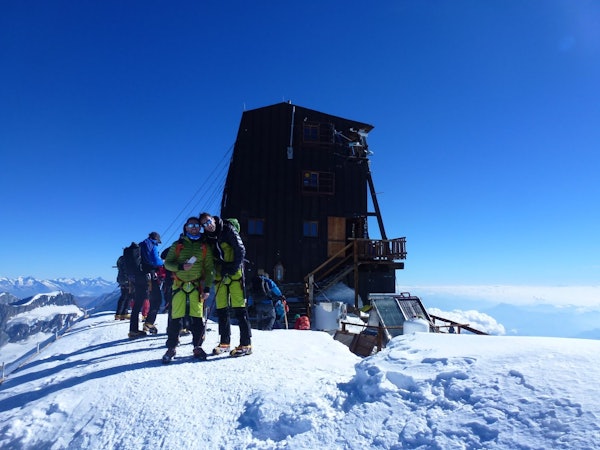
rom Courmayeur, the Skyway cable car climbs more than 2,000 metres, rotating slowly as it rises so you can look out over Mont Blanc's Italian face. It stops at Punta Helbronner (3,466 m), right on the French-Italian border and in the heart of the massif. Our home for the night, the Torino Hut, is just below the top station, so we leave the heavy gear there and keep only what we need for the climb.
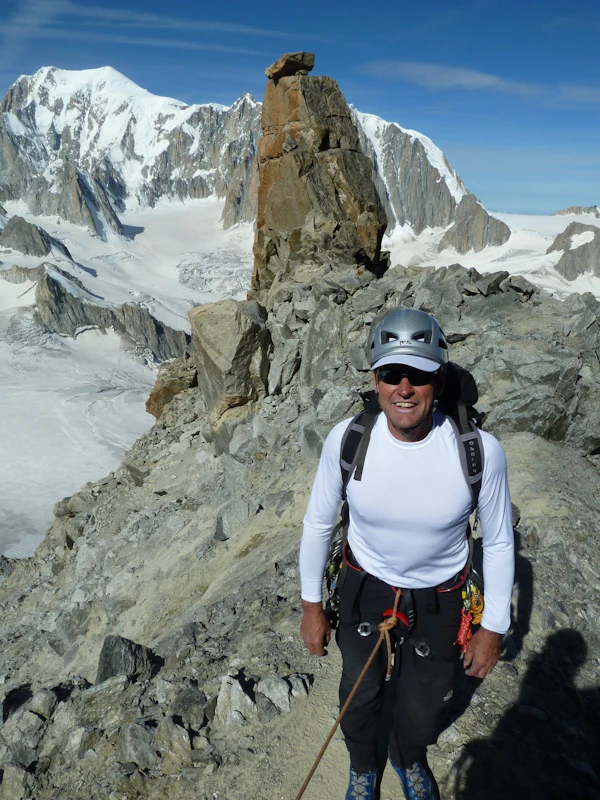
A tunnel and a lift take us through the rock and out onto the Glacier du Géant. Here you put on your crampons, rope up with your guide and head across the glacier toward the Aiguilles Marbrées. This short granite ridge rises from the ice, with the Dent du Géant and the Grandes Jorasses standing close by.
The traverse is a good first step toward the Matterhorn. It mixes easy climbing on solid rock with short sections of snow and ice, and your guide moves you between the two while keeping the rope short and running along the crest. These are the same skills you'll use on both of the Matterhorn's ridges. Because the route isn't long, you can concentrate on moving well, and your guide can see how you climb and adjust the plan for the days ahead. Throughout the day you're also moving above 3,300 metres, which gives your body its first real altitude stimulus.
In the afternoon we return to the Torino Hut, one of the highest huts in the Italian Alps. The evening brings a generous Italian dinner, followed by sunset over the Mont Blanc range. Sleeping this high is a key part of the acclimatization plan, and it prepares you for tomorrow's longer and more exposed ridge.
Ascent: approx. +300 m | Descent: approx. –300 m | Climbing time: approx. 4–5 hours

After breakfast at the Torino Hut, we rope up and cross the Glacier du Géant toward the Aiguilles d'Entrèves. This jagged granite crest runs along the French-Italian border, with the Vallée Blanche below on one side and Courmayeur far down on the other.
Today is a step up from the Aiguilles Marbrées. The traverse is longer and more exposed, with narrow sections of crest, airy steps between towers, and short climbing moves that call for steady footwork and a calm head. This is the kind of terrain you'll meet high on the Matterhorn. Your guide keeps the rope short and the pace even, and pays close attention to how you move. By now they know your strengths and your rhythm, which matters a great deal for the Matterhorn.
After the ridge we return to the glacier and climb gently to the Col des Flambeaux (3,407 m), then continue back to Punta Helbronner. The second day spent above 3,300 metres completes the acclimatization from the Mont Blanc massif and prepares your body for the altitude you'll reach on the Matterhorn.
After lunch at the Torino Hut, we take the Skyway down to Courmayeur, where a hot shower and a proper bed are waiting. Your guide will go over the plan for the Hörnli Hut and summit day, and you'll have time to rest, pack and pick up snacks in town before we leave for Cervinia in the morning.
Ascent: approx. +400 m | Descent: approx. –400 m | Climbing time: approx. 5–6 hours

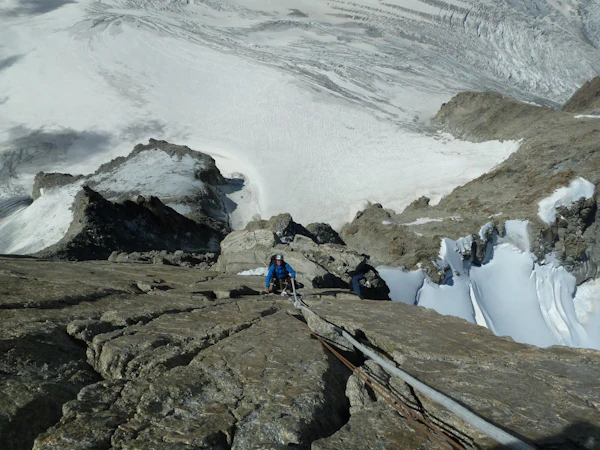
Today we leave the busy routes of Mont Blanc and head into a quiet corner of the Aosta Valley for one of our favourite climbs: the Rey Ridge to Punta Tsan. Few climbers know this route, but for decades the Matterhorn guides have used it to test their clients before the real climb, and for good reason. It is a close match for the Matterhorn: a long day of sustained effort, short-roping on exposed ground, pitches on solid, beautiful rock, and a demanding descent that takes as much care as the ascent.
Your guide will use the day to see how you move over many hours: your pace, your footwork on exposed ridges, your efficiency in the steeper sections, and how you manage the descent. By the end of the day, you and your guide will have a clear sense of your readiness for the Matterhorn, and your guide can fine-tune the plan for the days ahead.
The setting is part of what makes this climb special. The valley is wild and untouched, ibex and chamois are almost always nearby, and the Matterhorn rises on the horizon for much of the day, giving you a good look at the ridges you'll soon be climbing.
In the afternoon we return to Courmayeur for a shower, a good dinner and a night of rest before a lighter day tomorrow.
Ascent: approx. +1,200 m | Descent: approx. -1,200 m | Climbing time: approx. 7–8 hours

Much of the Matterhorn is climbing on rock, and the more comfortable you are on steep terrain, the more efficiently and safely you'll move on summit day. Today we climb a multi-pitch rock route of moderate difficulty and length in the valleys around Courmayeur. Your guide will focus on the details that matter most on the Matterhorn: precise footwork, smooth movement, and handling the rope quickly at belays.
After three demanding days, today is also meant as active recovery. The goal is not to push hard, but to keep your body moving, stay sharp, and let your legs recover so that you arrive at the Matterhorn rested and in top condition.
Day 4 also gives us flexibility. If the forecast shows a better weather window earlier than planned, we can skip the rock climbing and move the Matterhorn ascent forward, heading to the Hörnli Hut a day early. Your guide will follow the forecast closely all week and make this decision with you.
In the afternoon we return to Courmayeur, where you'll prepare your gear for the Matterhorn. Your guide will go over the plan for the next two days and the latest forecast, and you'll have time for a good dinner and an early night.

After breakfast in Courmayeur, we drive about to Breuil-Cervinia, at the foot of the Matterhorn's Italian face. It's worth looking up at the Lion Ridge here, because if conditions allow, it's the ridge you'll descend tomorrow.
A series of lifts then takes us up through the Plateau Rosa area to the Testa Grigia on the Swiss-Italian border, at almost 3,500 m. From there the Matterhorn Alpine Crossing carries us over the glaciers into Switzerland, and we continue down to Schwarzsee (2,583 m), a small lake beneath the mountain's east face. The short time at altitude along the way adds to the acclimatization from the first two days.
From Schwarzsee we walk to the Hörnli Hut, which takes about two hours. The trail climbs steadily along the crest of the Hörnli, with the Gorner Glacier and the Monte Rosa range opening up behind you.
The Hörnli Hut sits right where the climbing begins, and from its terrace the ridge rises straight up, close enough to follow much of tomorrow's line by eye. The afternoon is for resting, drinking plenty of water and eating well. Your guide will go through the plan for summit day: the timing, the key sections of the ridge, and the conditions that will decide between the full traverse and a return by the Hörnli. You'll prepare your gear and have an early dinner, and lights go out early, with breakfast served around 4 a.m.
Ascent: +700 m | Walking time: approx. 2 hours

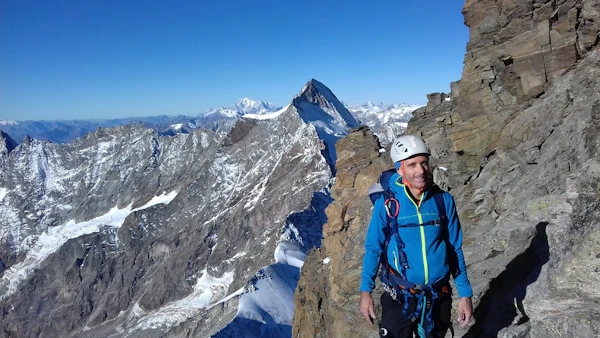
Breakfast is around 4 a.m., and you gear up with your guide inside the hut. The ridge starts a few minutes away, at a short wall with fixed ropes. Your guide sets a steady rhythm you can hold for hours, since the energy you save now will matter on the descent. The lower ridge is easy climbing on broken rock, but route-finding is essential: many false trails cross the face, and knowing the right line saves time.
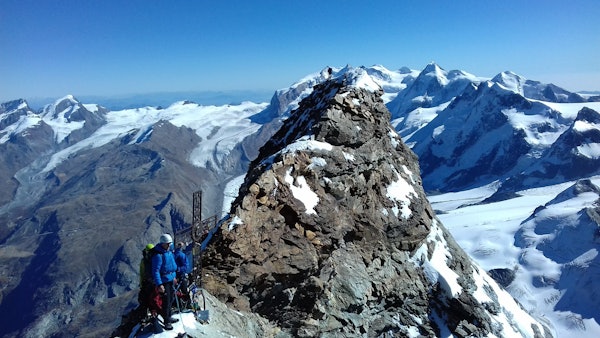
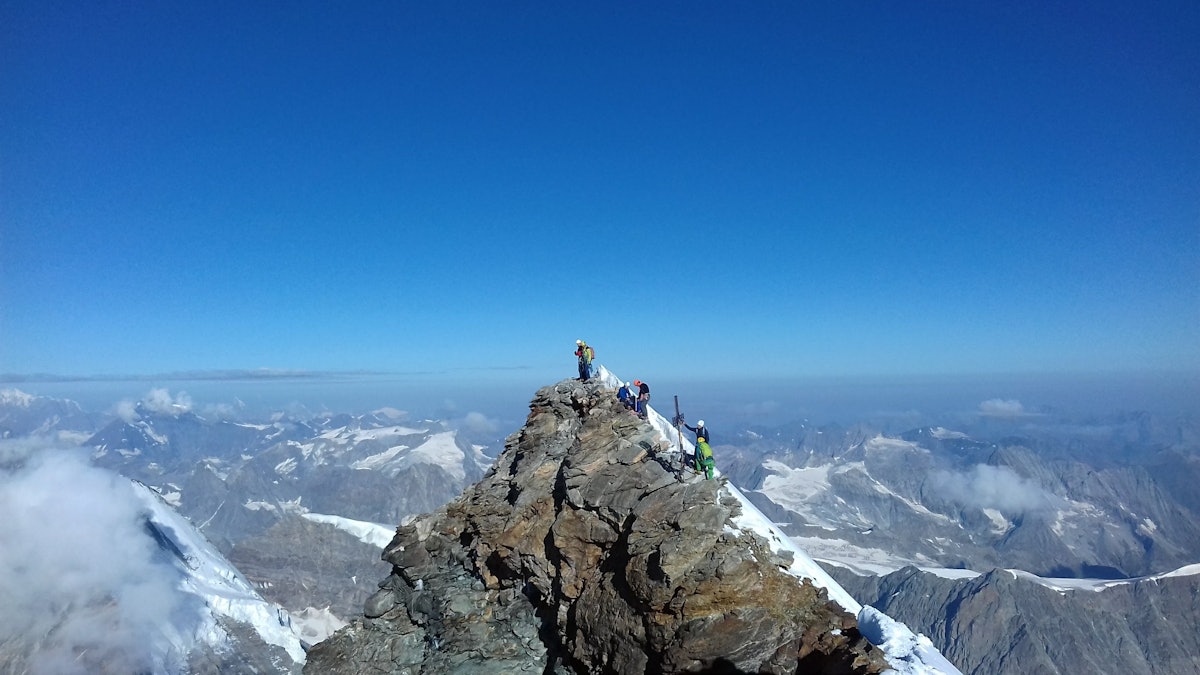
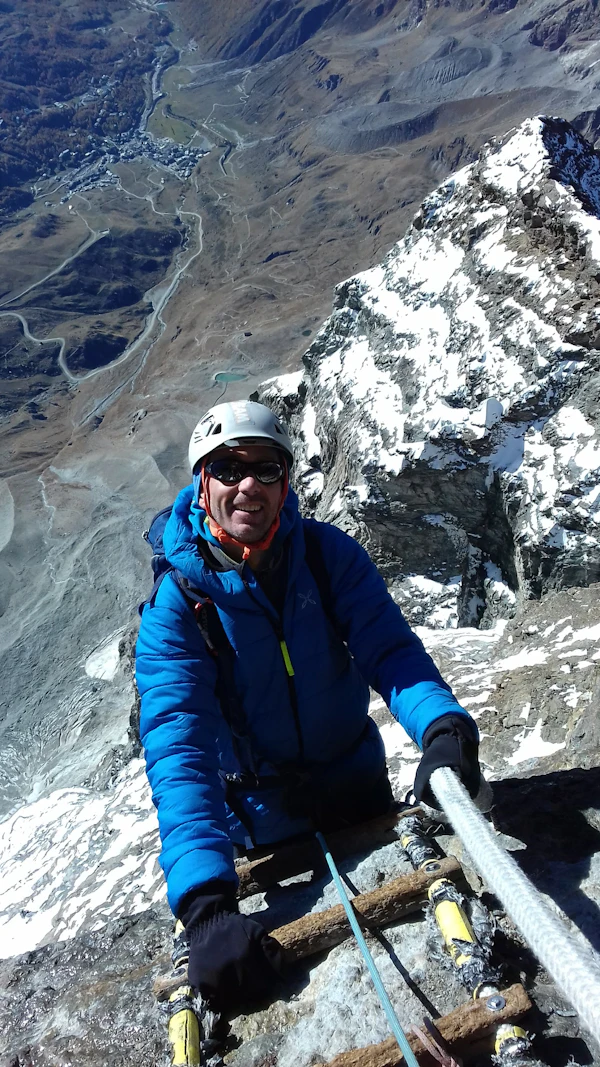
The Untere Moseley Platte leads to the Solvay Hut (4,003 m), which you should reach within 2 to max 2.15 hours. That timing tells your guide whether the traverse is still possible. Above, the ridge becomes steeper and more exposed. Crampons usually go on at the Shoulder, and thick fixed ropes lead to the Swiss summit. A short, airy crest then takes you to the Italian summit and its iron cross.
The traverse. If conditions and timing allow, you descend into Italy by the Lion Ridge. You go down the exposed Jordan Ladder, then over the Pic Tyndall and down a series of fixed ropes to the Carrel Hut (3,830 m). From there the path continues via the Duca degli Abruzzi Hut to Cervinia, where we left the car two days earlier.
The Hörnli descent. If the Lion Ridge isn't in safe condition, you descend the route you climbed, with your guide belaying you on the steep sections. From the hut, you walk down to Schwarzsee and take the lifts back to Cervinia.
From Cervinia, we drive back to Courmayeur, where your final hotel night is included. After a hot shower and a well-earned dinner, you can look back on four days that took you from the Mont Blanc massif to the summit of the Matterhorn. The program ends after breakfast the next morning.
Ascent: approx. +1,220 m | Descent (traverse): approx. –2,470 m | Time: approx. 10–12 hours
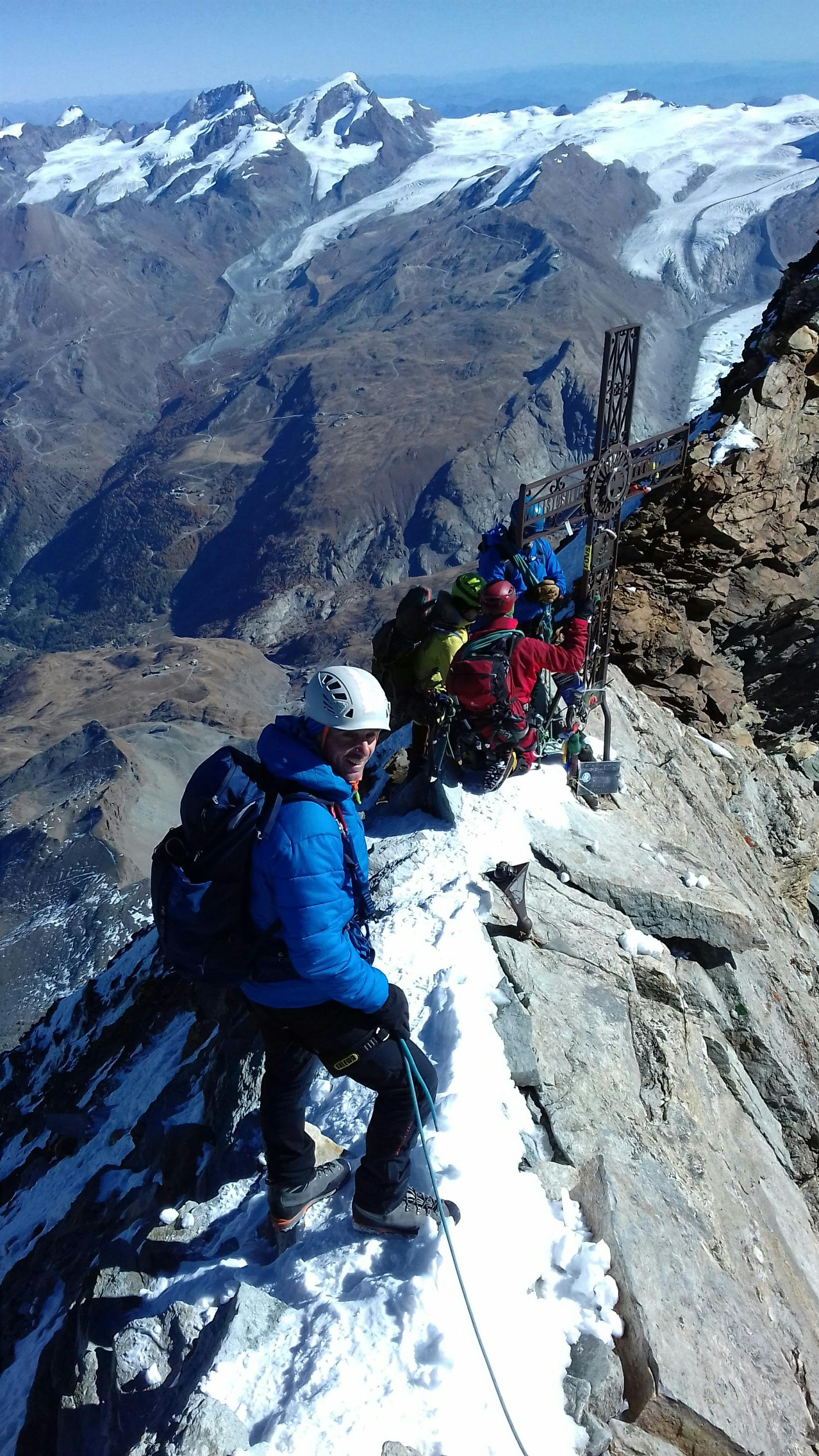
To climb the Matterhorn, you need a combination of technical and physical skills:
Physical Fitness:
Mental Toughness:
We ask for a 30% deposit at the time of booking, which secures your place on your chosen departure. Each departure is confirmed once it reaches the minimum group size of 2 participants — at that point we'll contact you and the outstanding balance becomes due.
Once the departure is confirmed, the booking becomes non-refundable. We work this way for a simple reason: a confirmed departure means every guest can book flights well in advance, when prices are at their best. For this reason we strongly advise taking out cancellation insurance at the time of booking.
In the rare case that a departure doesn't reach the minimum of 2 participants, we'll contact you well in advance and offer you the choice of:
We meet at our hotel in Courmayeur at 6:00 p.m. on Day 0, the day before the climbing begins. Your first hotel night is included, so you can check in on arrival, settle in and meet your guide for the gear check and program briefing. You'll receive the hotel details and practical information once your departure is confirmed.
Yes. Mountain rescue insurance is mandatory for this program. Your policy must cover search and rescue costs, including helicopter evacuation, and must explicitly include mountaineering at altitudes above 4,000 metres. Many standard travel policies exclude mountaineering, so please check the conditions carefully.
For rescue cover, we recommend membership of the Austrian Alpine Club (Sektion Britannia). Membership includes the Alpenverein Weltweit Service (AWS), which covers rescue after accidents during leisure activities such as mountaineering. It also gives you reduced rates in many Alpine huts. Keep in mind that this cover is designed mainly for mountain rescue and does not replace full travel insurance, so check whether you need additional cover for medical treatment and your other needs.
We also strongly recommend cancellation insurance, taken out at the time of booking, in case something unexpected prevents you from joining the program.
The Guiding Ratio is 1:2 (1 Guide to 2 Guests) for the first 4 days of the course and then 1:1 for the last 2 days, during the Matterhorn ascent.
The climbing season for the Matterhorn generally runs from early July (when the Hörnli Hut opens) until the end of September. Of course, each season in the Alps is different, and especially in recent years, with the undeniable effects of climate change, there has been a significant increase in variability from one season to another.
The main factor determining optimal climbing conditions on the Matterhorn is the amount of snow present (a mountain like the Matterhorn is easier to climb when it is completely - or almost completely - dry). In winters with low snowfall, which has frequently been the case in recent seasons, the climb is often already in good condition by early July. That being said, the best period to have the highest chances of finding good conditions on the mountain is statistically from mid-July to the end of August.
Since the weather is beyond our control, in the event of bad weather or poor conditions on the mountain, the lead Guide will suggest alternative climbs. Generally, when bad weather sets in around the Matterhorn, on the Italian-Swiss border, there are other areas in the southern Alps that remain on the edge of the storm, allowing us to complete highly satisfying climbs that offer technical challenges similar to the Matterhorn.
Every decision made by our Guides on the mountain (and this should be the key reason for hiring a Mountain Guide) is focused on the safety of our Guests, which is always the north-star behind all our decisions (we have a +20-year track record with no incidents in the Alps, and we intend to keep it still for a long time!).
The program includes 7 nights in total, all on a half-board basis (dinner, overnight stay and breakfast).
We spend 2 nights in mountain huts. On Day 1 we stay at the Torino Hut (3,375 m) in the Mont Blanc massif, where sleeping at altitude is a key part of your acclimatization. On Day 5 we stay at the Hörnli Hut (3,260 m), at the foot of the Matterhorn's ridge, ready for an early start on summit day. Both huts offer shared rooms with blankets provided, so you only need to bring a sleeping bag liner.
The other 5 nights (Day 0, 2, 3, 4 and 6) are in our hotel in Courmayeur, which is the base for the whole program. Courmayeur is an ideal starting point for the preparation climbs, and it is quieter and more relaxed than nearby Chamonix. Staying in the same hotel for most of the week means you can settle in, leave any gear you don't need in the mountains, and return each evening to a hot shower and a comfortable bed.
Lunches and snacks are not included, but they're easy to organise. On the climbing days a full lunch isn't practical, so we recommend bringing light, easily digestible food that you can eat on the move: cereal bars, dried fruit, nuts, chocolate, and perhaps a small sandwich. On summit day, having enough small snacks you enjoy makes a real difference to your energy over a long day.
Bring enough for the first two days on Mont Blanc. From Day 2 onwards we're back in Courmayeur every evening, so you can easily restock at the local supermarkets for the rest of the week. On Day 2 you can also buy lunch at the Torino Hut before taking the Skyway down.
Your guide will advise you on quantities at the briefing on Day 0.
The most convenient airport is Geneva, about 1 hour 30 minutes from Courmayeur through the Mont Blanc Tunnel. Milan Malpensa is also an option, but it's further away and has fewer public transport connections, so you would usually need to rent a car.
On request, we can arrange a private return transfer between Geneva and Courmayeur. This is not included in the program price and is quoted separately.
Before departure, we always set up a WhatsApp group for everyone on the same dates. It's a good place to share travel plans, ask questions, and arrange shared transfers or car rentals with other participants, which is often the easiest and cheapest way to reach Courmayeur.
All dinners and breakfasts are included, both in the huts and at our hotel in Courmayeur.
At the Torino Hut (Day 1), dinner is a typical Italian mountain meal: a first course of pasta or soup, then a main course of meat or vegetables, and dessert, all in generous portions. At the Hörnli Hut (Day 5), dinner is also plentiful and good, and breakfast is served early, around 4 a.m., before summit day.
On all the other evenings (Days 0, 2, 3, 4 and 6), dinner is at our hotel in Courmayeur. It's a good chance to enjoy the cooking of the Aosta Valley after a day of climbing and, on the last evening, to celebrate the Matterhorn.
Vegetarian options and alternatives for dietary needs (gluten-free, lactose-free, etc.) are available both in the huts and at the hotel. Please let us know about any requirements when you book. In the huts, drinking water must be bought in bottles, so keep a little budget for it.
Both huts where we will stay overnight accept credit cards, so there is no need to carry much cash with you (just for small expenses). In Courmayeur, there are numerous ATMs available in case of need.
Yes, there is usually good reception at the huts. It is also possible to charge your electronic devices, though having a power bank can be useful. The charging outlets are of the European type, so if you are coming from outside Europe, you will need to bring an adapter.
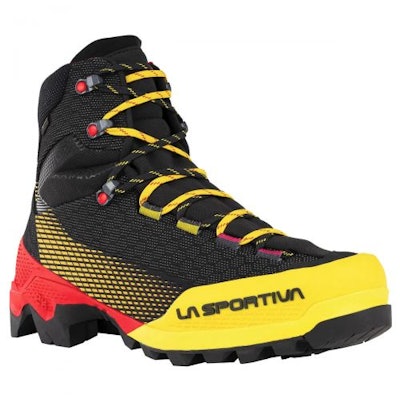
Mid-flex mountaineering boots are essential for the type of climbing you'll face. These boots provide the necessary support and performance. B3 boots are not fine for technical mountaineering courses.
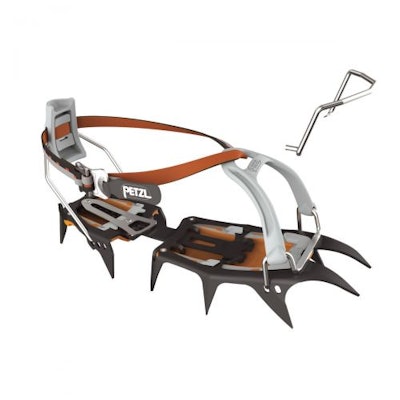
Steel 12-point crampons with anti-balling plates are essential. Avoid 10-point, aluminum, or rigid one-piece models, as they won't provide the necessary grip or flexibility.
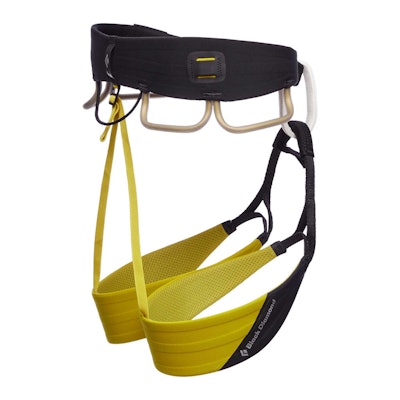
A lightweight, comfortable harness. Choose one with gear loops, ensuring it's compact and easy to wear with a backpack for unrestricted movement.
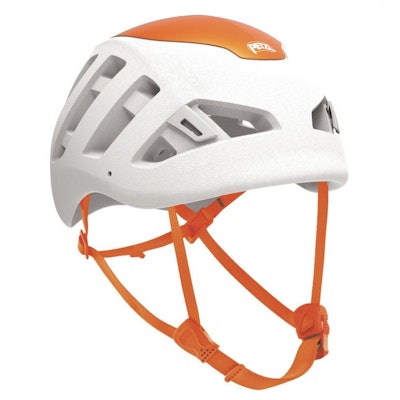
A lightweight, durable climbing helmet. It should provide solid protection while being well-ventilated and comfortable for extended wear during the ascent.
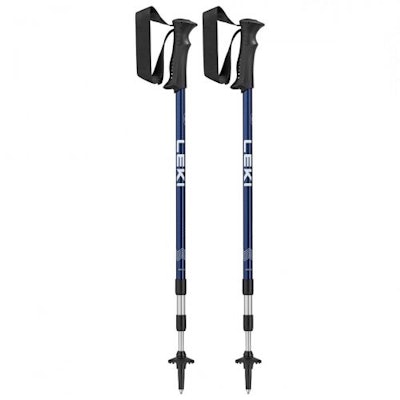
Extendable trekking poles are useful during preparation days but not needed for the tech climbs. Ensure they're lightweight, adjustable, and easy to pack away when not in use.
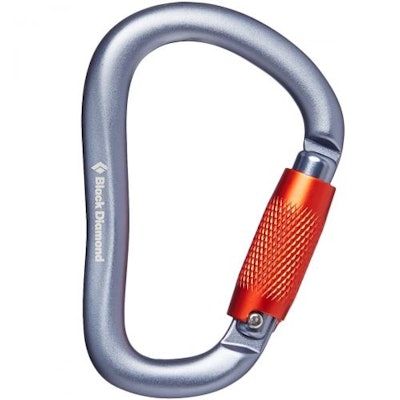
A screw-gate carabiner is a versatile and reliable tool for ski touring. It features a locking mechanism for added security, making it ideal for anchoring gear or connecting components.
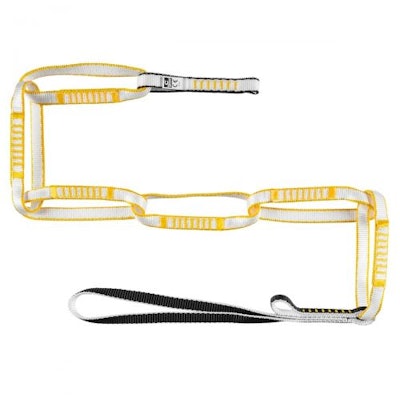
A personal anchoring system is essential for safety when skiing on a glacier. It is valuable in rescue situations and during potential abseils, ensuring versatility and reliability.
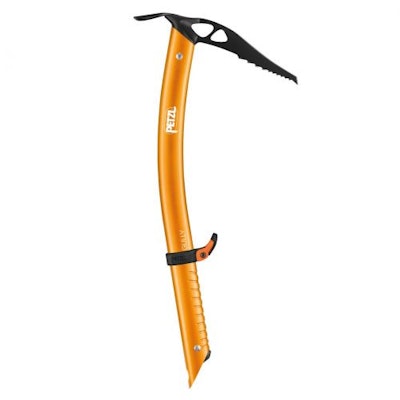
A hybrid mountaineering ice axe with a maximum length of 60 cm offers improved comfort during the climb. It provides better maneuverability and fits well with climbing gear.
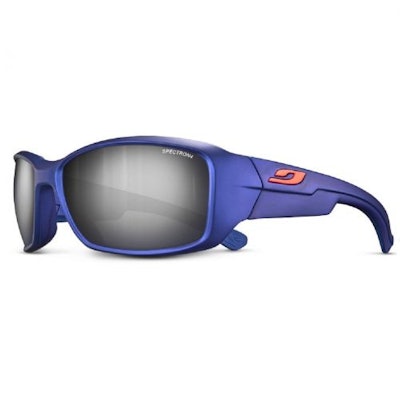
Bring sunglasses with high protection (grade 3 or 4) to protect your eyes from intense sunlight and glare at high altitudes, ensuring clear vision and reducing eye strain.
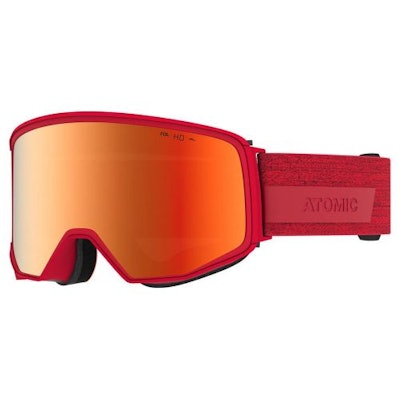
Bring ski goggles to protect your eyes from blizzards, strong winds, and cold. They ensure clear vision and shield your face from harsh weather conditions.
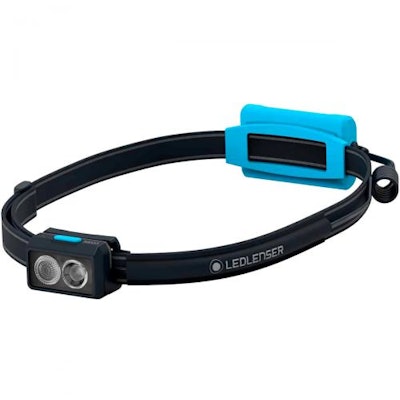
Bring a headlamp with new batteries and a minimum output of 300 lumens. It’s essential for visibility and safety during night-time climbs and low-light situations.
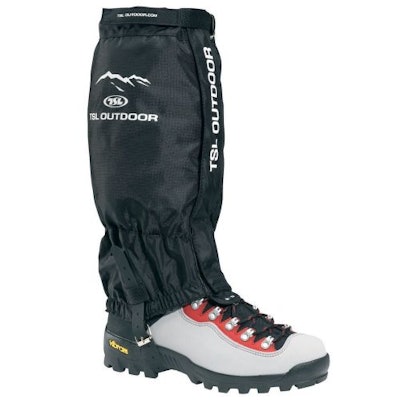
Bring gaiters to protect your boots and lower legs from snow, debris, and moisture during the climb. They keep you dry and comfortable by preventing snow or rocks from entering your boots.
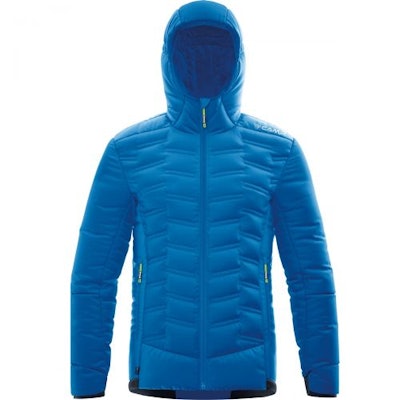
Pack a down jacket to ensure warmth in cold conditions. Its insulation traps body heat, making it ideal for high altitudes and freezing temperatures, while remaining lightweight and compressible.
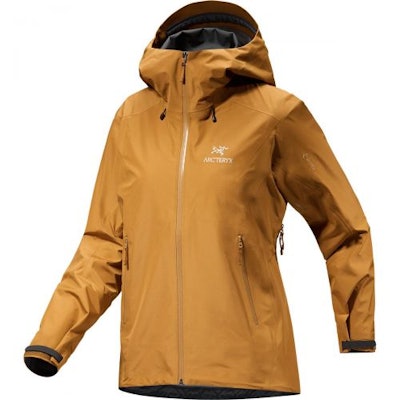
Your hardshell jacket must include a hood for full protection from wind, rain, and snow. Waterproof and breathable, it serves as a critical outer layer, ensuring comfort and mobility in harsh conditions.
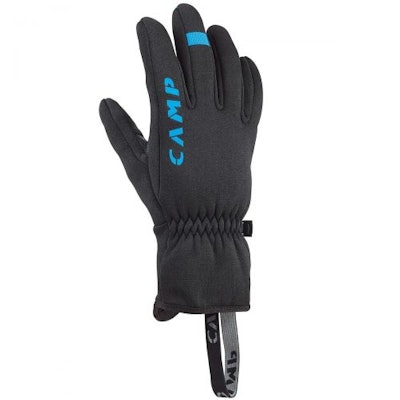
Bring full-finger thin gloves for dexterity and light protection during the Haute Route. They offer warmth in mild conditions while allowing precise hand movements.
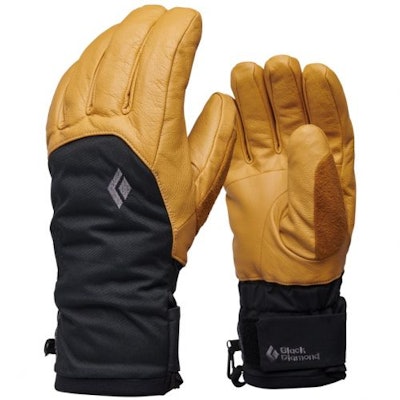
Full-finger softshell gloves are essential for protection against wind and light moisture. They offer warmth, durability, and flexibility, ensuring ease of movement while handling gear in cold conditions.
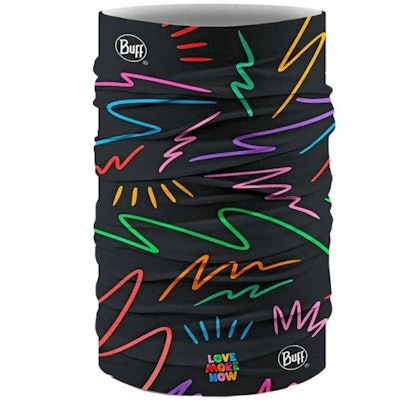
A buff is versatile and provides essential protection against wind, cold, and sun. It can be worn around the neck, over the face, or as a head covering, offering warmth and comfort in changing conditions.
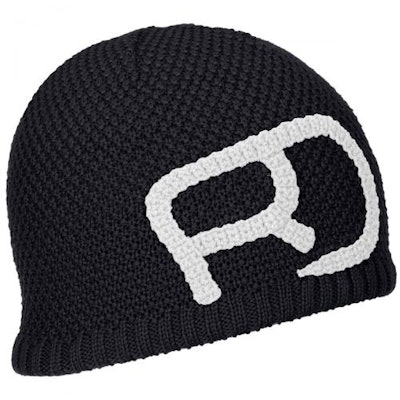
A warm hat is crucial for retaining heat during cold conditions. It provides insulation for your head and ears, ensuring comfort while climbing in low temperatures and protecting against wind chill.
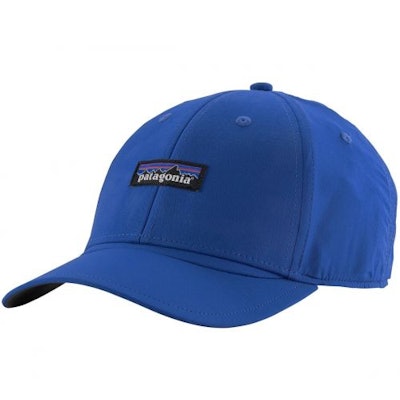
A sun hat is essential for protecting your face and neck from harmful UV rays. It offers shade and breathability, keeping you cool and comfortable during long hours in sunny conditions.
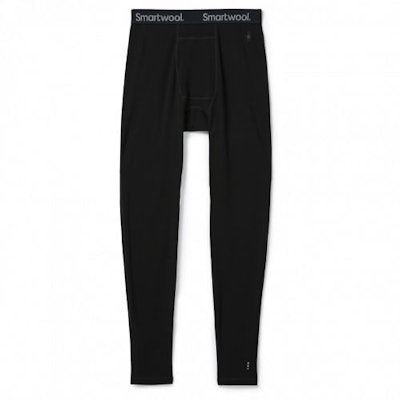
Lightweight leggings are ideal for base layer during cold days. Merino wool is preferable for its moisture-wicking properties and comfort, providing warmth without adding bulk and helping regulate temperature.
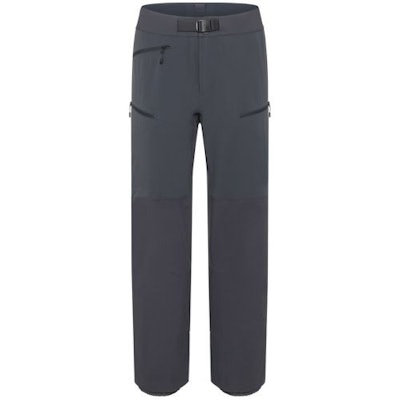
Stretch softshell pants offer flexibility and comfort. They provide a balance of breathability and weather resistance, allowing for ease of movement while protecting against wind and light moisture.
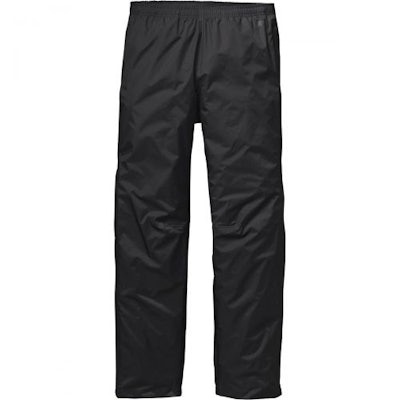
Hardshell waterproof pants are vital for protection against rain and snow. Choose ones with full-length separating side zippers for easy access and ventilation, ensuring comfort and mobility.
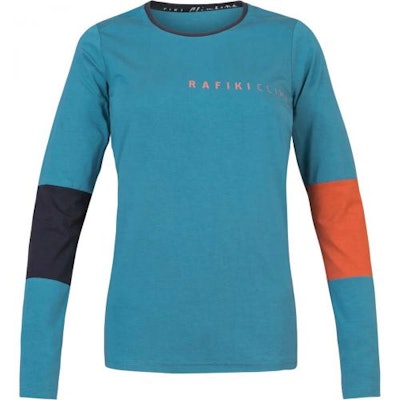
A lightweight long-sleeve sun top is essential for UV protection. Opt for merino wool or synthetic materials instead of cotton for better moisture management and comfort.
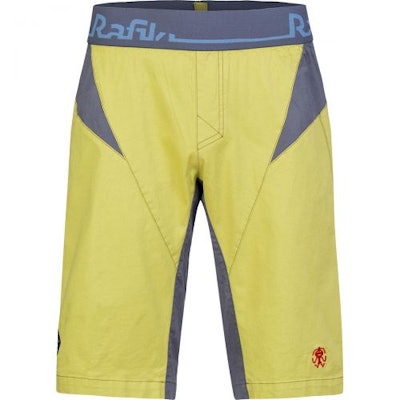
Shorts are perfect for warm approach days, providing comfort and freedom of movement. Choose lightweight, breathable materials to keep cool while navigating to your climbing destination.
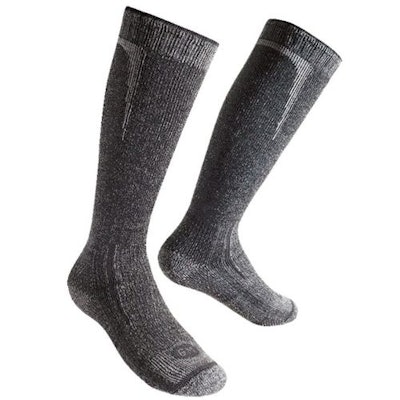
Pack three pairs of hiking socks, long ones, for added protection. They help prevent blisters and ensure your feet stay comfortable throughout your trip.
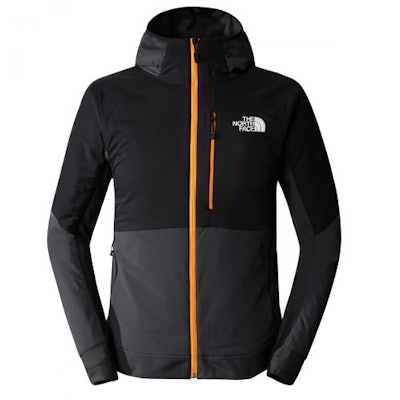
A midlayer top is essential for insulation and must fit comfortably over your baselayers. It provides warmth while allowing for breathability, making it ideal for varying temperatures during your tour.
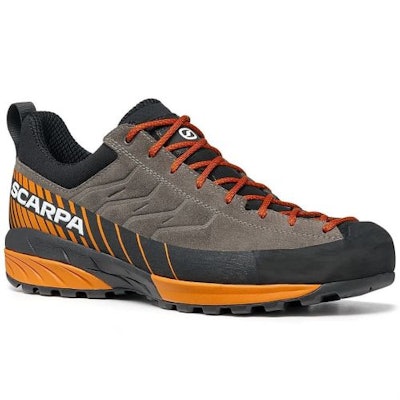
Approach shoes are essential for rocky terrain and can be used during some climbs. They offer a good balance of traction and comfort, making them ideal for navigating both trails and technical sections.
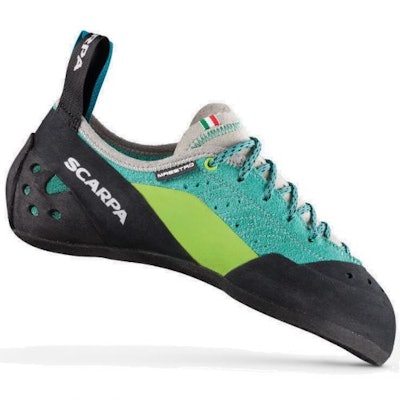
Rock climbing shoes are essential for multi-pitch routes, providing the necessary grip and precision. Choose a pair that provides comfort for all-day wear during your adventure.
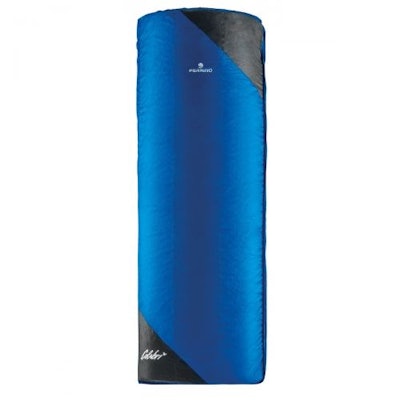
A sleeping bag liner is essential for comfort, with silk being preferable due to its lightweight nature. It’s mandatory in all huts in the Alps, used alongside the blankets provided for a cozy sleep.
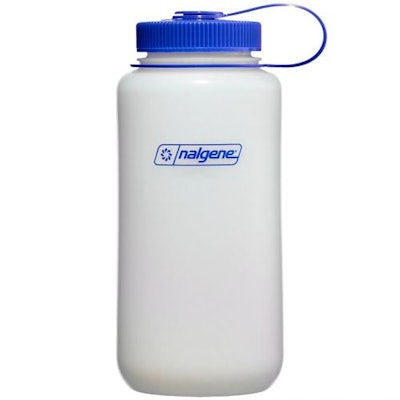
A hydration system with at least 1 liter capacity is essential, depending on your drinking habits. Camelbacks work well but may freeze in cold conditions, so plan accordingly to stay hydrated.
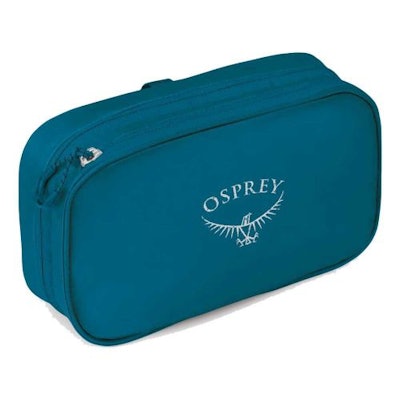
A personal care bag is essential for your trip. Include a toothbrush, toothpaste, first-aid tape, Band-Aids and any personal medications or prescriptions for a safe and comfortable journey.
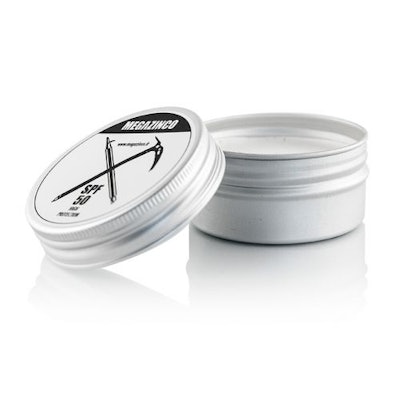
Sunscreen with SPF 50 is essential for high mountain conditions, providing superior protection against harmful UV rays. Apply generously to all exposed skin to prevent sunburn during the tour.
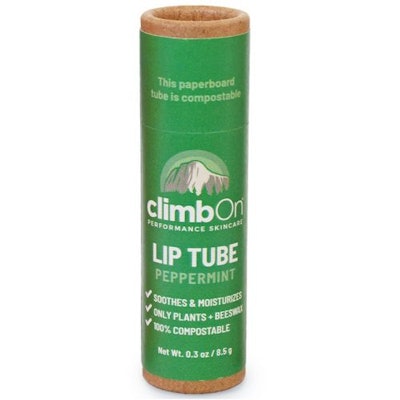
A high-protection lipscreen is essential for shielding your lips from UV rays and harsh weather in the mountains. It helps prevent chapping and sunburn, keeping your lips moisturized and safe.
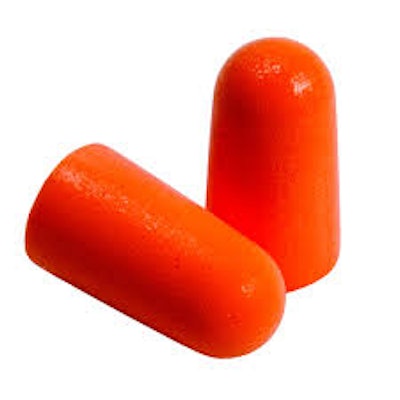
Earplugs are a must-have for your trip, especially if you find yourself in a hut with a neighbor who thinks they're auditioning for a snoring competition. Enjoy some peace and quiet!
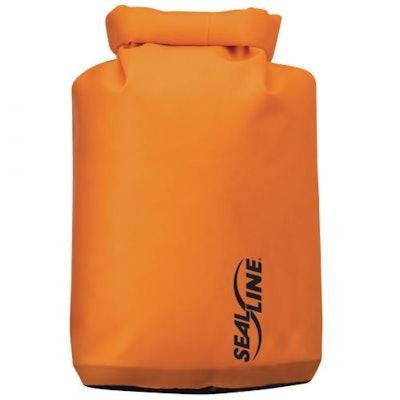
Keep your personal documents in a waterproof bag to protect them from moisture and damage. This ensures that essentials like your ID, permits, and insurance information stay safe.
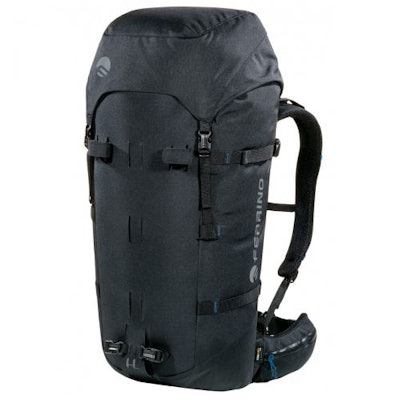
A technical mountaineering backpack. It should have a capacity of 30-40 liters, providing enough space for gear without being too bulky or heavy.