 See 1 more 👉
Coming soon
From 2.950 €
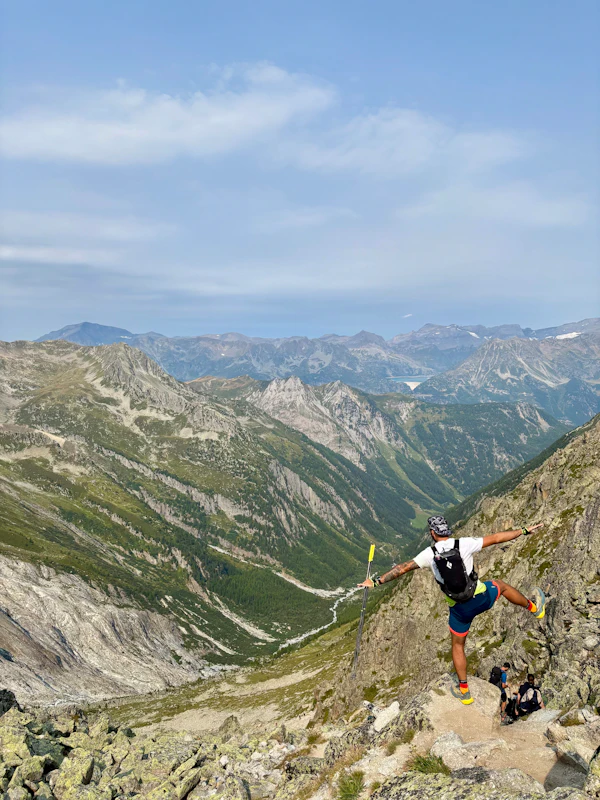
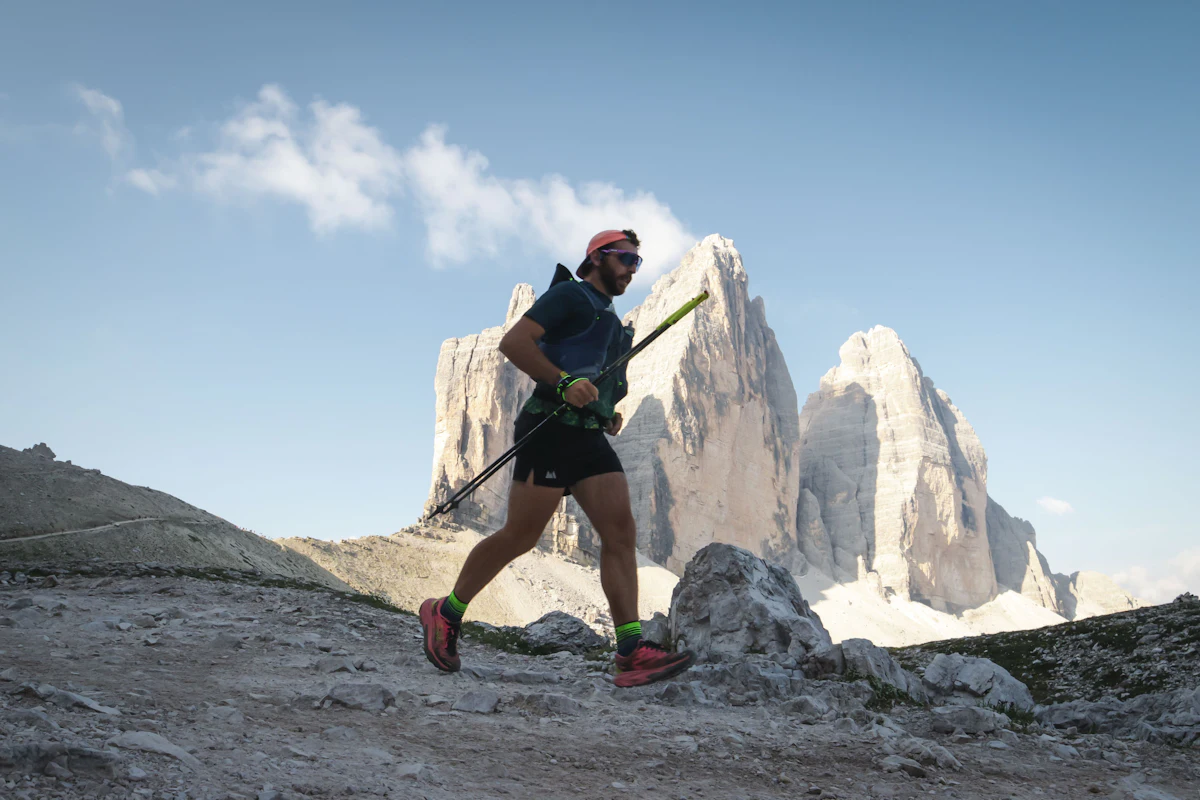
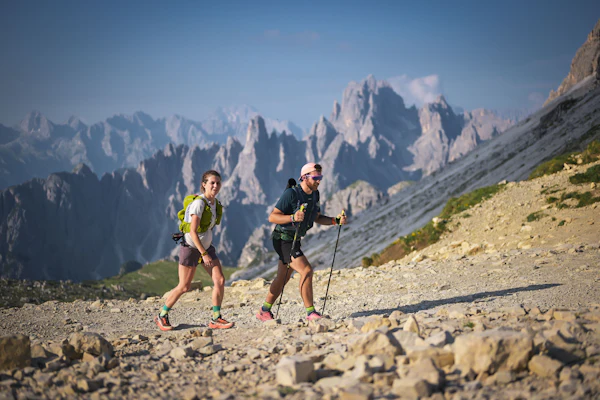
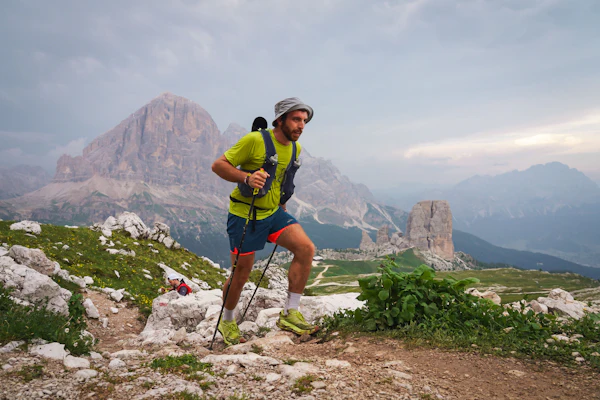
I have some questions 🙋Five days of guided trail running through the heart of the Dolomites, on the same trails used by the Lavaredo Ultra Trail: from Cortina d'Ampezzo to the Tre Cime di Lavaredo, through the wild Fanes valleys and over Passo Giau, back to the finish line beneath Cortina's bell tower. Around 105 kilometers and 5,000 meters of climbing, run in stages, in daylight, at a pace that lets you see every peak.
We stay in the same hotel in Cortina all week, and our van drops you at every trailhead and collects you at every finish. Transfers from Venice, trail nutrition, every dinner from the welcome pizza to a traditional farewell dinner at Forst: all included. One guide for every five runners.
Cortina d'Ampezzo sits at the center of a ring of mountains that has no equal anywhere in the Alps: the Tofane, Cristallo, Sorapiss, the Cinque Torri and, just over the ridge, the Tre Cime di Lavaredo. Every June, one of the most celebrated trail races in the world runs a loop through all of them in a single push, mostly through the night. The Lavaredo Trail Camp runs the same trails in five stages, in daylight, with time to stop, look and enjoy.
It is a simple idea, built for runners who want the whole course and none of the hassle. We run the flats and the descents, hike the steep climbs, and stop when the view demands it, which in the Dolomites is often. You carry only a light vest. Our van takes you to the start of each stage and is waiting at the end of it. Nutrition is in your pack, dinner is booked, your room is the same every night. Your only job is to run.
We follow the course as it is raced, one section at a time. The first stage leaves straight from the center of Cortina and heads north to the medieval hospice of Ospitale. The second climbs beneath Monte Cristallo and finishes on the shore of Lake Misurina. The third is the signature day: the full circuit beneath the Tre Cime, then a long descent to Cimabanche, with the option to continue to Malga Ra Stua if the group feels strong. The fourth crosses the wild Fanes valleys and the remote Val Travenanzes to Col Gallina. The fifth closes the loop over Passo Giau and the Lastoni di Formin, back into Cortina.
Instead of moving hotel every night, we stay in the same hotel in Cortina d'Ampezzo for the whole week. Each morning our private van drives you to the trailhead, and each afternoon it collects you at the finish. You unpack once, your bag never moves, and every evening ends in one of the most beautiful mountain towns in the Alps, with its shops, café terraces and a passeggiata along the Corso Italia.
The van also lets us control every day precisely: no road sections, no long approaches, and the chance to shorten or extend a stage depending on the group and the conditions.
This is not a race, and there is no clock. It is the race terrain experienced at a pace that lets you actually see it: an espresso at the rifugi, a photo stop at Forcella Lavaredo, a long look across the Fanes plateau. Your guides set a steady, sustainable rhythm, read the group every morning and adapt each day to conditions. And for anyone with a Dolomite ultra on their calendar, it is one of the most enjoyable ways there is to learn the course before pinning on a bib.
Your guides are experienced trail runners who have run these trails many times, in training and on race day. They know every climb, every technical descent and every rifugio on the course. With one guide for every five runners, the group can split by pace on the longer days, no one is left waiting and no one is pushed.
From the moment you land, the trip is taken care of. We collect you at Venice Marco Polo Airport and drive you into the Dolomites, and we bring you back at the end of the week. Every night of accommodation, every breakfast and every dinner are included, and so is your trail nutrition on each running day: gels, bars and electrolytes chosen by our guides.
The week opens with a welcome pizza in Cortina, the proper Italian start to a week in the mountains. It closes with a traditional farewell dinner at Forst, in the heart of Cortina: Ampezzo cooking, casunziei and local specialties, and the shared satisfaction of a loop well run.
This camp is for runners who are already comfortable in the mountains. You do not need to be fast and you do not need to have run an ultra. You do need to be at ease on steep, rocky trails and able to spend 4 to 6 hours on your feet on consecutive days, with daily climbs of up to around 1,200 meters. If you have run a mountain marathon or a 30 to 50 km trail race, you will be at home here. The Requirements section has the full detail and our training advice.
We have been guiding in the Alps for over 20 years, and we design our trips around one idea: the mountain should be everything, and everything else should be handled.
Recovery built into the week. Five big mountain days in a row are about recovery as much as running. That is why we keep you in the same hotel all week, with a private room and bathroom, a proper dinner every night and no packing in the morning. You start each stage restored rather than merely rested.
One price, no surprises. Transfers from Venice, hotel, breakfasts and dinners, the welcome pizza and the farewell dinner at Forst, daily van support and trail nutrition, and guiding throughout. All included. You book once, and then your only job is to run.
Real guiding, real decisions. Dolomite weather changes fast, and early summer can leave snow on the high passes. Guides who know the course turn those variables into decisions, a different start time, a variant, a shorter stage, rather than problems. This is what you cannot get from a GPX track.
The course, without the race. On race weekend these trails carry thousands of runners, and Cortina's hotels fill a year in advance. Our camp runs before race week, when the trails are quiet and the course belongs to the mountain.
Your week in the Dolomites begins the easy way: we collect you. A shared group transfer departs Venice Marco Polo Airport in the early afternoon and is included in the price of the trip, a scenic two-hour drive from the lagoon, through the Piave valley and up into the mountains. If your flight schedule does not fit the group transfer, we can arrange a private transfer at any time of day for an additional cost; just let us know when you book.
Cortina d'Ampezzo is the perfect base for the week. Host of the 1956 and 2026 Winter Olympics, it sits in a wide green basin ringed by some of the most famous peaks in the Dolomites: the Tofane, Cristallo, Sorapiss and Pomagagnon. From the moment you step out of the van, you can see where the week will take you.
After check-in, we meet as a group. Your guides run a relaxed but thorough briefing: introductions, an overview of the five stages, the daily rhythm of the week, and a check of everyone's running vest and kit. This is also when we hand out your trail nutrition for the days ahead. Then, the proper Italian start to the journey: the group heads out together for the welcome pizza, wood-fired and unhurried. Tomorrow, the running begins straight from the center of town.
Shared transfer from Venice Marco Polo Airport (included) | Private transfer available on request (extra cost) Night in Cortina d'Ampezzo Meals: welcome pizza dinner
The week begins exactly where the race does: in the center of Cortina, beneath the bell tower of the Basilica dei Santi Filippo e Giacomo.
We run out of town and climb into the forests of larch and spruce above the Boite valley, on the trails that open the course. It is a steady first climb, the kind you settle into rather than attack, and the views open quickly: the Tofane on one side, the Pomagagnon and Cristallo on the other, and the whole Ampezzo basin spread out below.
From here the trail rolls north through forest and clearings, with stretches of the most runnable terrain of the week, before descending to Ospitale (1,490 m), a medieval travelers' hospice on the ancient road between the Venetian Republic and the Tyrol, with its tiny church of San Nicolò. A gentle, beautiful first day to find your rhythm on Dolomite terrain, and a first taste of the course.
Our van is waiting at Ospitale for the short drive back to Cortina, with the afternoon free to enjoy the town.
Distance: approx. 18 km | Ascent: +1,000 m | Descent: -800 m | Time on the trail: approx. 3.5 to 4.5 hours Transfer Ospitale to Cortina Night in Cortina d'Ampezzo Meals: breakfast, dinner, trail lunch and nutrition
After breakfast, our van takes us back to Ospitale, exactly where we left the trail yesterday.
Today the course turns wilder. We climb away from the valley into the quiet side valleys beneath the great walls of Monte Cristallo, on trails that see a fraction of the walkers of the busier Dolomite routes. The terrain becomes more alpine with every step: scree, dwarf pine and pale limestone towers above, and the first views east toward the Cadini di Misurina.
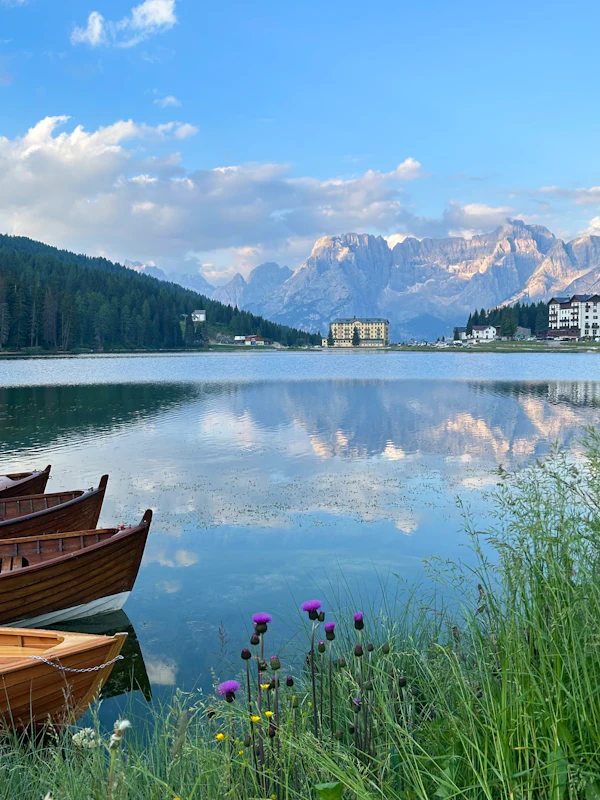
After the high point of the day, a long, flowing descent through forest and meadow leads toward the Ansiei valley, before a final climb brings us to Lake Misurina (1,754 m), the pearl of the Dolomites, with the Sorapiss reflected in the water and, for the first time, the unmistakable silhouette of the Tre Cime di Lavaredo on the horizon. Tomorrow we run beneath them.
The van collects us at the lake for the drive back over Passo Tre Croci to Cortina.
Distance: approx. 22 km | Ascent: +1,200 m | Descent: -900 m | Time on the trail: approx. 4.5 to 5.5 hours Transfer Cortina to Ospitale | Misurina to Cortina Night in Cortina d'Ampezzo Meals: breakfast, dinner, trail lunch and nutrition
The signature day of the week, and one of the great days of trail running anywhere in the Alps.
From Misurina we climb to Rifugio Auronzo (2,320 m) at the foot of the Tre Cime di Lavaredo, and from there we run the full circuit beneath their north faces, the most famous view in the Dolomites. Past Rifugio Lavaredo, the trail climbs to Forcella Lavaredo (2,454 m), where the three towers suddenly rise in their full height directly above you. Then a magnificent balcony leads to Rifugio Locatelli (2,405 m), facing the north walls across the plateau: there is no more iconic sight in the Dolomites, and running beneath it is something you will not forget.
From Locatelli, a fast descent drops into the wild Val Rienza, past the deep blue waters of Lago di Landro, framed by the Cristallo massif, and on to Cimabanche (1,530 m), the old border pass between Italy and Austria.
The long option: on to Malga Ra Stua. If the group feels strong and the weather is settled, we continue across the open Lerosa plateau, one of the most peaceful high pastures of the course, and descend to Malga Ra Stua (1,668 m). The guides make the call at Cimabanche, based on the group and the conditions.
Either way, the van is waiting at the finish for the drive back to Cortina, buzzing from the best day of the week.
Cimabanche: approx. 25 km | Ascent +1,100 m | Descent -1,300 m | approx. 5 to 6 hours Malga Ra Stua option: approx. 34 km | Ascent +1,600 m | Descent -1,500 m | approx. 6.5 to 7.5 hours Transfer Cortina to Misurina | Cimabanche/Malga Ra Stua to Cortina Night in Cortina d'Ampezzo Meals: breakfast, dinner, trail lunch and nutrition
Today we run the quietest and most remote section of the course, and for many runners it is the hidden gem of the week.
From the high pastures of Malga Ra Stua, the trail enters the Fanes-Sennes-Braies Nature Park, winding past canyons and tumbling waterfalls into silent valleys where the only sound is the river and your own footfall. This is the Dolomites at their most peaceful, far from roads and crowds, with marmots whistling from the meadows and chamois on the scree above.
The heart of the day is the long climb through the remote Val Travenanzes, between the walls of the Tofane and the Lagazuoi, a valley that was the front line of the First World War and still holds its trenches and tunnels. A long, satisfying climb brings us to Forcella Col dei Bos (2,331 m), high among the rock towers, with the Cinque Torri rising ahead. From here a series of flowing switchbacks leads down to Col Gallina (2,054 m), near Passo Falzarego, and the end of the stage.
Big climbing, big descending, and some of the most serene running of the whole week. Our van takes us back to Cortina.
Distance: approx. 21 km | Ascent: +1,200 m | Descent: -800 m | Time on the trail: approx. 5 to 6 hours Transfer Cortina to Malga Ra Stua | Col Gallina to Cortina Night in Cortina d'Ampezzo Meals: breakfast, dinner, trail lunch and nutrition
The grand finale, and a spectacular one. Today we close the loop on the final kilometers of the course.
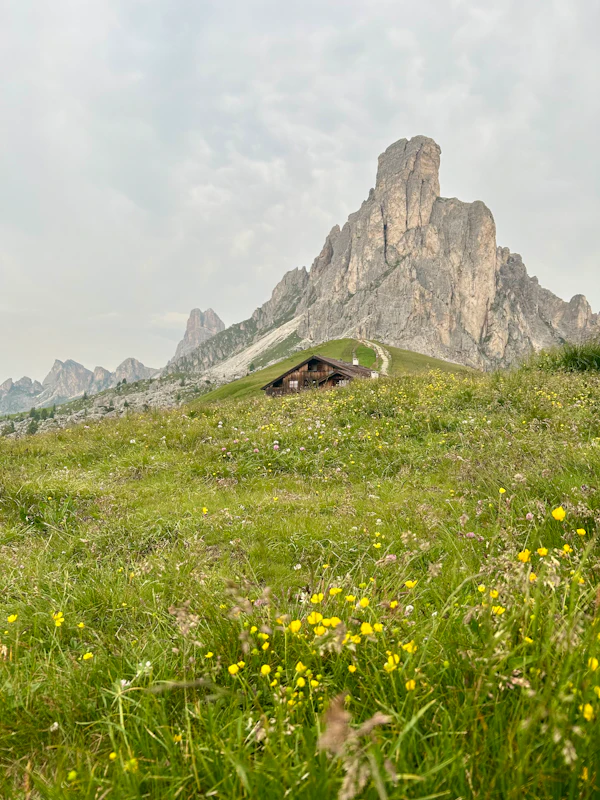
From Col Gallina we run past the Cinque Torri, the five towers that are one of the symbols of the Dolomites, then on toward the Nuvolau and down to the legendary Passo Giau (2,236 m), one of the most famous cols of the Dolomites, with the Ra Gusela standing guard above. From the pass, the trail traverses a magnificent high line, and then the plateau of the Lastoni di Formin delivers what many runners rate as the single finest panorama of the week: a sea of Dolomite peaks in every direction, from the Pelmo and Civetta to the Tofane.
The last section passes the little lake of Lago Federa beneath the Croda da Lago, then a long, joyful descent through woodland leads into the back of Cortina, finishing in the heart of town beneath the bell tower, exactly where the race ends. The loop is complete: around 105 kilometers and 5,000 meters of climbing through the greatest scenery in the Dolomites.
Tonight we celebrate together with a traditional farewell dinner at Forst, in the heart of Cortina: Ampezzo cooking, a long table and the particular warmth of a group of runners who have just closed the loop together.
Distance: approx. 22 km | Ascent: +850 m | Descent: -1,700 m | Time on the trail: approx. 4.5 to 5.5 hours Transfer Cortina to Col Gallina Night in Cortina d'Ampezzo Meals: breakfast, farewell dinner at Forst, trail lunch and nutrition
After five stages and one legendary loop, the final morning is deliberately unhurried. A relaxed breakfast, no shoes to lace, and time for a last coffee on the Corso Italia with the Tofane above town, the same streets you walked on your first evening, though they look a little different once you have run all the way around them.
The shared group transfer to Venice Marco Polo Airport departs after breakfast and is included in the price of the trip, in comfortable time for afternoon flights. If your plans do not fit the group schedule, or you would like to stay on in Cortina or spend a night in Venice, we are happy to arrange a private transfer at an additional cost.
However you choose to end it, the achievement travels home with you: the complete loop of the Lavaredo trails, from Cortina to the Tre Cime and back.
Shared transfer to Venice Marco Polo Airport | Private transfer available on request Meals: breakfast
The Lavaredo trails are mountain trails, not climbs: there is no glacier travel, no via ferrata and no need for mountaineering experience. But run in five consecutive stages, the loop is a serious undertaking: around 105 kilometers and 5,000 meters of climbing on genuine alpine terrain, with passes above 2,400 meters. The single most important ingredient for enjoying it is arriving fit.
Trail running fitness and endurance. You should be comfortable spending 4 to 6 hours on your feet per day, on consecutive days, with daily climbs of 850 to 1,200 meters. The key word is consecutive: plenty of runners can handle one big mountain day, but this week asks for five in a row. The Tre Cime day is the highlight, and with the Malga Ra Stua option it becomes the longest of the week at around 34 km. This is not all-out running: we run the flats and descents, hike the steep climbs, and stop regularly, but the underlying fitness has to be yours.
Mountain running experience. You should be confident running on steep, rocky and occasionally loose trails, and on long, sustained descents, which surprise more runners than the climbs do. In early summer, old snow patches can linger on the highest passes, where your guides will choose the safest line. Experience of a mountain marathon, a 30 to 50 km trail race or regular long runs in hilly terrain is the right background.
Run light. With the van at every start and finish, you carry only a running vest of 5 to 12 liters with water, your trail nutrition, a waterproof jacket, a warm layer and personal items.
How to prepare. We recommend starting structured training 10 to 14 weeks before departure, building toward around 40 to 50 km a week with regular climbing, and including back-to-back long runs at weekends: two consecutive days of 3 to 4 hours on hilly trails is the single best test. Strength work for the legs and core pays off most on the long descents. If you can comfortably run two consecutive days of 20 km with 1,000 meters of climbing, you are ready for the Lavaredo Trail Camp.
If you are unsure whether your fitness or experience is right for this trip, contact us before booking. We are happy to talk through your background honestly and, if needed, point you toward a sensible training plan.
It is a 7-day trail running trip (6 nights, 5 running days, arrival and departure days) based in Cortina d'Ampezzo, running the complete loop of the Lavaredo trails in five guided stages: Cortina to Ospitale, Ospitale to Misurina, the Tre Cime di Lavaredo to Cimabanche or Malga Ra Stua, Malga Ra Stua to Col Gallina, and Col Gallina back to Cortina over Passo Giau. Transfers from Venice, hotel, breakfasts, dinners, trail nutrition and van support are all included.
We run on the same trails used by the Lavaredo Ultra Trail, following the course in five stages from Cortina back to Cortina. The camp is an independent SummitGuides trip, not affiliated with the race organization. It is a great way to learn the course in daylight, with guides who know it well.
No. There is no race, no clock and no pressure. We run the flats and the descents, hike the steep climbs, and stop for photos, an espresso at the rifugi and the views. Your guides set a steady, sustainable pace.
You should be a regular trail runner, comfortable on steep and rocky mountain trails, and able to spend 4 to 6 hours on your feet on consecutive days, with daily climbs of up to around 1,200 meters. You do not need to be fast and you do not need to have run an ultra. If you can comfortably run two consecutive days of 20 km with 1,000 meters of climbing, you are ready. See the Requirements section for full training advice.
The five running days range from around 18 km to 25 km, with 850 to 1,200 meters of climbing, for a total of roughly 105 km and 5,000 meters of ascent. On the Tre Cime day, strong groups can extend the stage to Malga Ra Stua, for around 34 km and 1,600 meters of climbing.
We keep groups small, with a maximum of 10 runners, and one guide for every five runners. On the longer days the group can split naturally by pace, and everyone gets close, personal attention.
In the same hotel in Cortina d'Ampezzo for all six nights, in double or twin rooms with private bathroom. You unpack once, and our van takes you to the start of each stage and collects you at the finish. Single rooms are available at an extra cost, subject to availability.
Breakfast at the hotel and dinner every evening are included, from the welcome pizza on your first night to the traditional farewell dinner at Forst. On every running day we provide your trail nutrition: gels, bars and electrolytes and a trail lunch (usually a sandwitch with some sweets). Along the route you pass many rifugi, ideal for a lunch stop, a coffee or a cold drink (not included). Please tell us about any dietary requirements or allergies when you book.
Mountain weather is part of the mountains, and this is where guiding earns its keep. Your guides check conditions every morning and adapt: adjusting start times ahead of afternoon storms, choosing variants, or shortening a stage. With the van always on hand, a change of plan is simple. Full days lost to weather are rare.
Fly to Venice Marco Polo Airport. Our shared group transfer brings you directly to Cortina d'Ampezzo on arrival day (approx. 2 hours), and takes you back to the airport after breakfast on the final day, in comfortable time for afternoon flights. Both are included. If your flights do not fit the shared schedule, we can organize a private transfer at an additional cost.
Yes, it is mandatory. Your travel insurance must specifically cover trail running, mountain rescue, helicopter evacuation and repatriation at altitudes up to 2,500 meters in Italy. A standard travel policy often excludes trail running, so please check the small print. We strongly recommend adding cancellation cover as well.
Absolutely, and many of our guests do. Solo travelers are paired in a twin room with another guest of the same sex, or you can book a single room at an extra cost, subject to availability. Five stages and six dinners together have a way of turning a group into a team.
If the departure is not yet confirmed, we ask for a 30% deposit at the time of booking, which secures your place; once the departure reaches the minimum number of participants, we confirm it and the outstanding balance becomes due. If the departure is already confirmed when you book, full payment is made at the time of booking. In the unlikely event the departure does not reach the minimum, we will either transfer your deposit to another SummitGuides trip or refund it in full. We strongly recommend taking out cancellation insurance.
Coming soon
From 2.950€
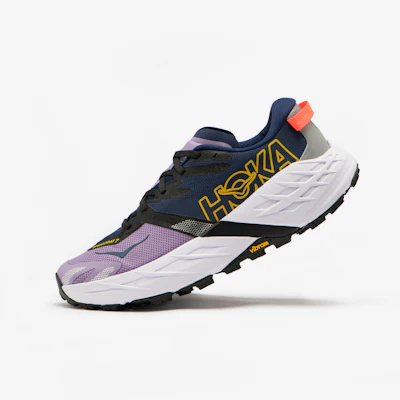
Essential. A grippy, protective trail shoe with a Vibram or similar outsole and good underfoot protection for rocky alpine terrain. Bring a well broken-in pair: six stages is a long time in new shoes. Road running shoes are not suitable.
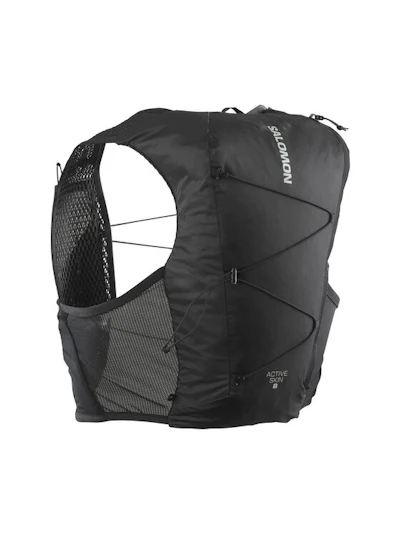
A running vest of around 5 to 12 liters, with room for 1.5 liters of water, your trail lunch, a waterproof jacket and a warm layer. Your main luggage travels separately and is waiting at your next hotel.
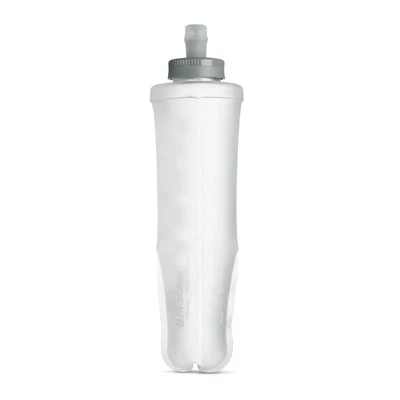
Soft flasks or a bladder with a total capacity of at least 1.5 liters. Water refill points exist along the route, at refuges and village fountains, but they cannot always be relied upon. We recommend carrying water purification filter as a backup.
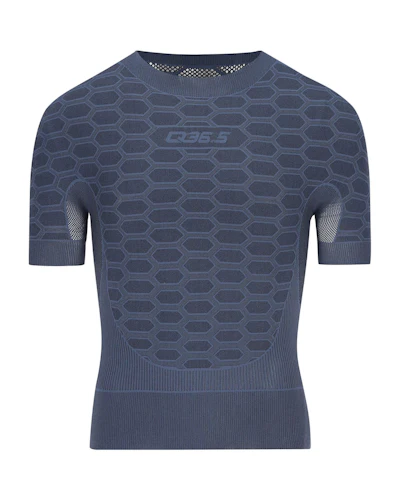
Lightweight and highly breathable synthetic or merino running tops, designed to wick moisture away from the skin and dry rapidly after washing.
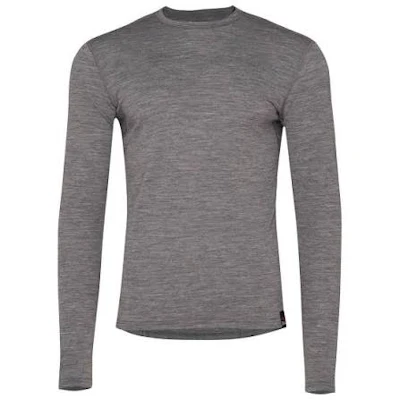
A long-sleeve merino or synthetic top is a versatile layer for cool mornings and high cols. It can also be a comfortable option for the evening.
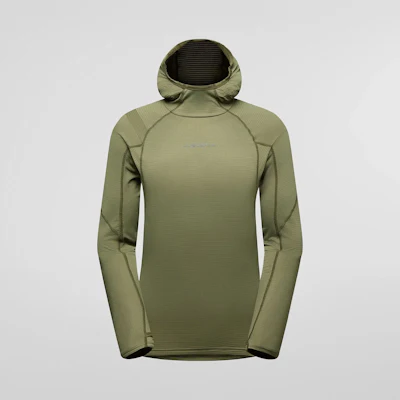
A lightweight fleece or thin insulated layer worn over your base layer for chilly starts, windy passes and stops. Choose a model that packs small into your vest.
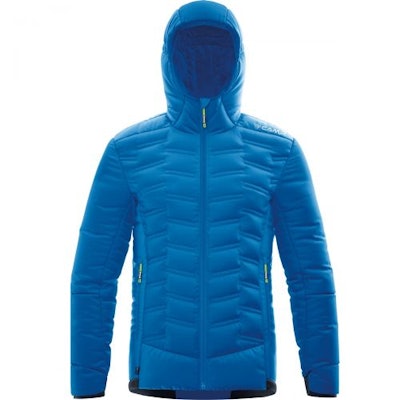
A very light synthetic or down jacket that packs into your vest, for long stops on the high passes or a sudden change in the weather. Synthetic insulation performs better if it gets wet.
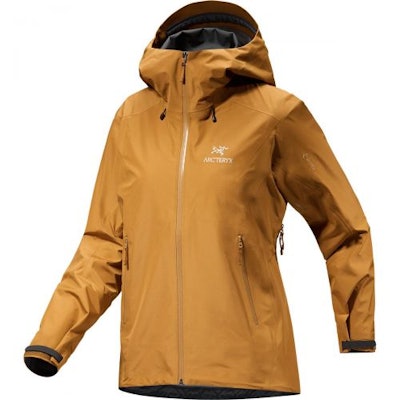
Mandatory every day. A light, packable, waterproof and breathable jacket with a hood, giving full protection from wind and rain. Mountain weather around Mont Blanc can change very quickly.
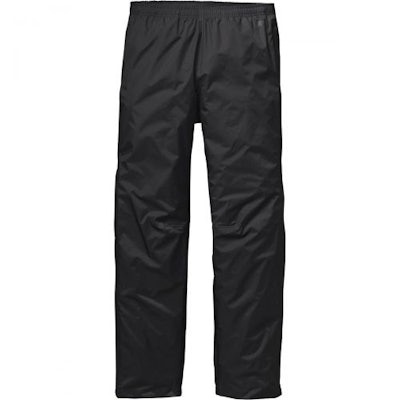
Light, packable waterproof overpants for rain and wind on the high passes. Running-specific models weigh very little and take almost no space in your vest.
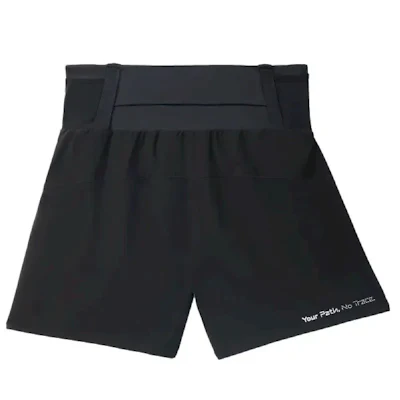
Trail running shorts are the most comfortable choice for most days, offering freedom of movement and good breathability. Pockets for gels and a phone are a bonus.
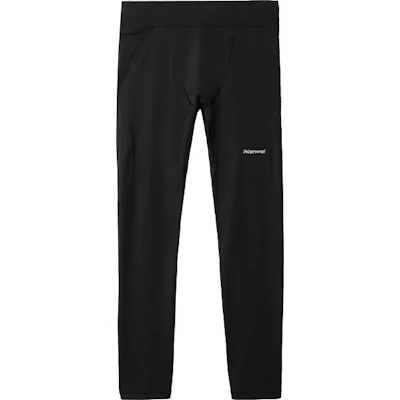
Long or three-quarter running tights for cool mornings, high passes and changeable weather.
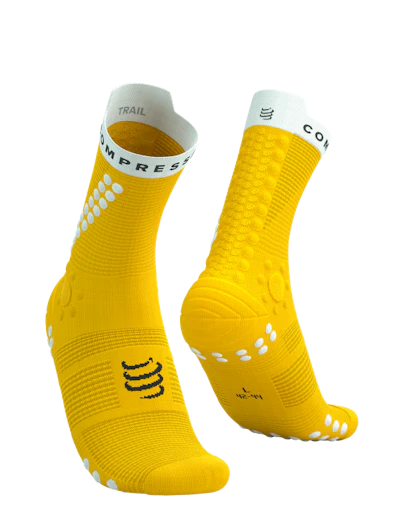
Trail running socks in merino or quality synthetic fibers, designed to wick moisture and prevent blisters. Bring enough pairs for a fresh, dry pair every day.
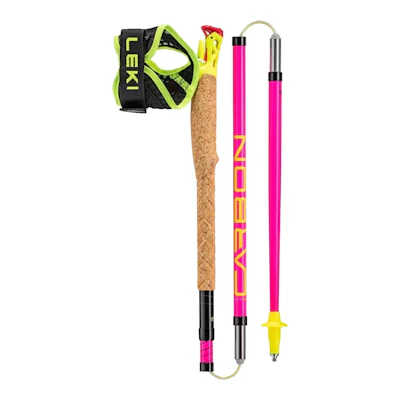
Highly recommended. Light, folding running poles help distribute the effort on long climbs and take the strain off your knees on the long descents of the TMB. Choose a model that stows easily on your vest.
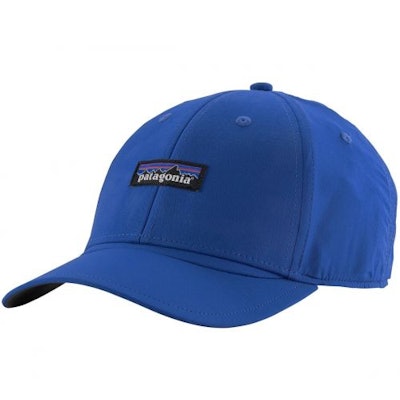
A running cap or visor protects your face and eyes from strong mountain sun while keeping you cool on the climbs.
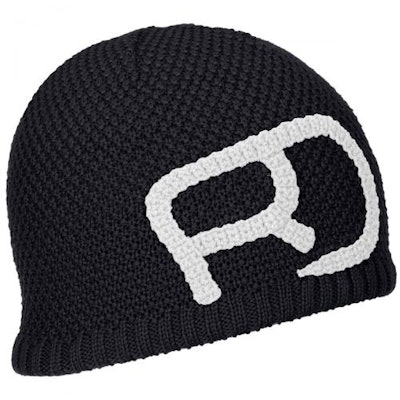
A light beanie for cold mornings and windy passes, even in summer. It weighs almost nothing and makes a real difference at 2,500 meters.
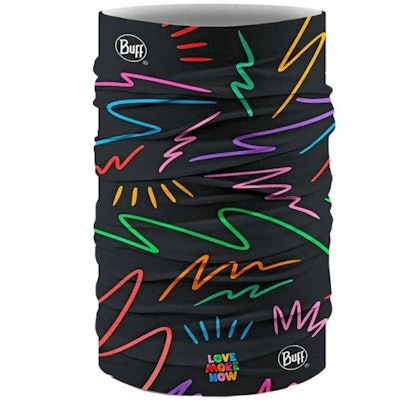
A buff protects against wind, cold and sun. It can be worn around the neck, over the face or as a head covering, and dipped in a stream on hot afternoons.
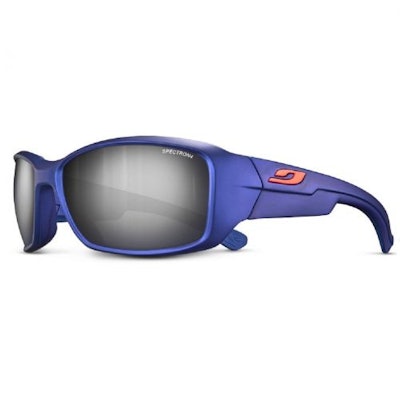
Sport sunglasses with good UV protection, adequate coverage and a secure, bounce-free fit for running.
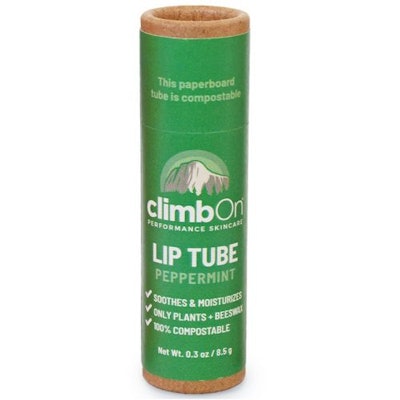
A high-protection lipscreen to shield your lips from UV rays and wind on the high passes.
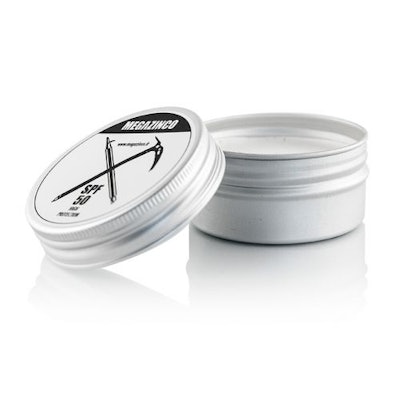
Sunscreen with SPF 50 is essential at altitude. Apply generously to all exposed skin, and reapply during the day.
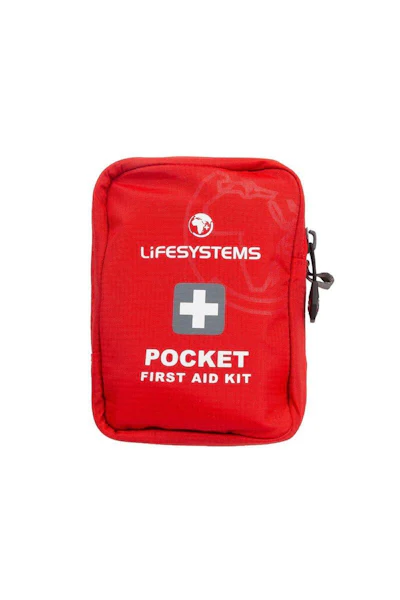
A small kit in your vest with blister plasters, tape, an emergency foil blanket, a whistle and any personal medication you may need during the day.
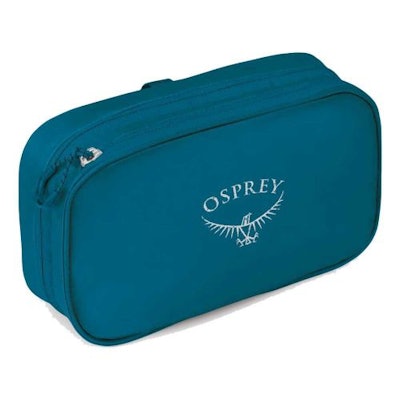
Pack a personal-care kit with essentials such as a toothbrush, anti-chafe balm, foot care and any medication you need. As your main luggage is transported ahead to your next hotel, this stays in your bag during the day.
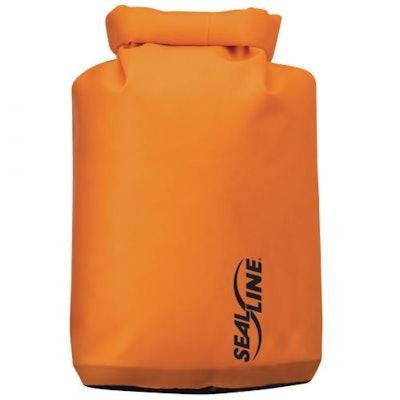
Keep your ID, Passport, insurance details and a payment card in a small waterproof bag in your vest.
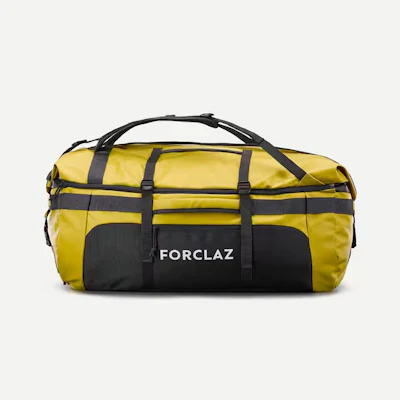
Your main luggage should be packed in a soft duffel-style bag rather than a hard-shell suitcase. Please keep it within the 15 kg maximum weight limit, as it is transferred between hotels every day.
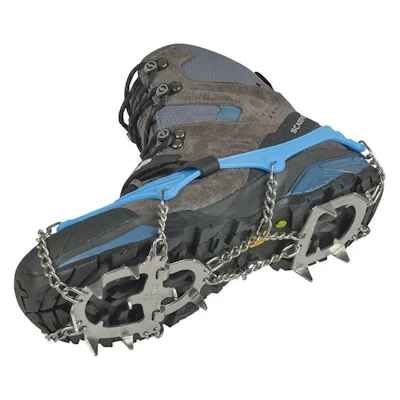
Not usually required in summer, but they can be useful if late snow or icy patches remain on the highest passes. We will advise before departure; if needed, they can usually be rented.